Historically, the key criteria that students used, to select colleges offering Computer Science education were college name, rankings, cut-offs and quality of placements. These factors still matter, but the industry has changed in the last few years. As a result, the way students prepare to become Computer Science professionals has also changed.
A number of new age universities for computer science in India are designing curricula with more practical learning built in. These programmes are trying to help students learn by building, working on real-world projects, taking up internships and learning from industry mentors, along with classroom teachers. Coding, AI, data, cloud, cybersecurity and more are examples of hands-on areas that are now becoming part of modern Computer Science courses.
Of course, traditional universities can still offer strong academic foundations and good outcomes. However, some gaps in conventional Computer Science education have become more visible over the last few years, and new-age universities are trying to address some of those issues.
Why Computer Science Education Is Changing
The way one looks at Computer Science Education today is different from what it was a few years ago. CS education is no longer just about “learning to code and getting a job in software.” There are many other domains to work in, such as Artificial Intelligence, Data Science, Cybersecurity, Cloud, Automation, Product Engineering and Software Systems.
Students who are trying to understand how Computer Science and Artificial Intelligence differ can read this guide on difference between CS and AI.
Furthermore, companies expect new graduates to have more than just a good grasp of programming in order to be job-ready. Apart from learning to develop systems and applications, Computer Science graduates also need to know how to apply technology to real-life situations.
To be better prepared, Computer Science students not only need to complete their academic education but also gain practical experience in their field of study by acquiring hands-on skills and showing proof of their work in the form of projects, internships or similar practical work.
As Computer Science education changes, so do the qualities that students look for in a college or university. Some of the following are examples of questions that prospective students may ask:
Will I get enough practical exposure?
Will I build real projects?
Will I learn AI and modern tools?
Will I get industry mentorship?
Will this course help me get ready for future tech roles?
What Are New-Age Universities for Computer Science?
New universities for Computer Science are those that can deliver practical, industry-relevant education. These programmes focus on projects, products and problem-solving for real-life scenarios, along with an in-depth study of Computer Science that students can apply while building projects, products and real-world solutions.
These universities often focus on:
Project-based learning
AI and data exposure
Industry mentorship
Coding practice from early semesters
Internships and career support
Startup and product-building exposure
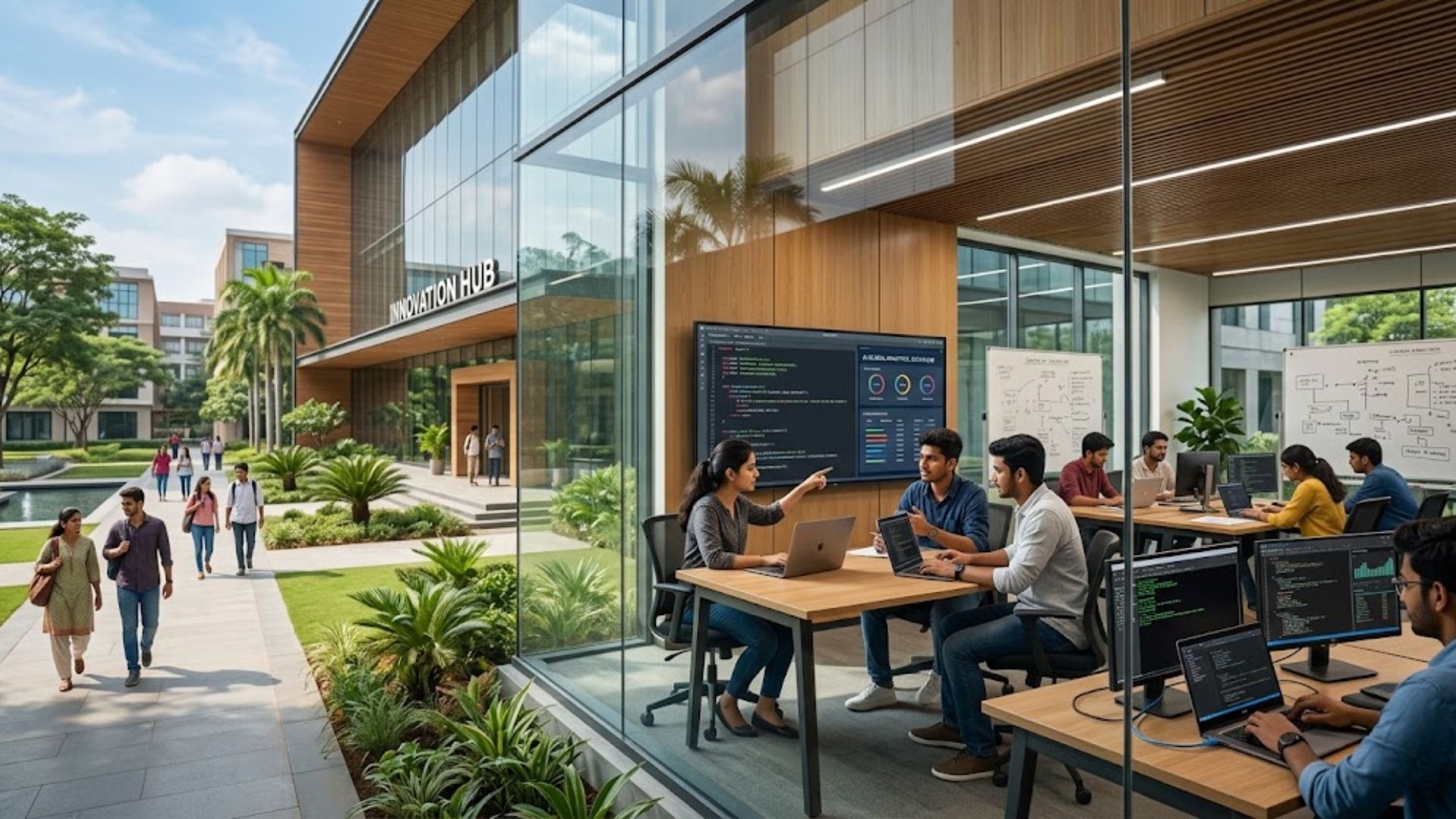
Hackathons and innovation labs
Interdisciplinary learning
Scaler School of Technology’s CS & AI Programme (do follow) is one such new-age programme that focuses on Computer Science Engineering, built for the AI era, with deep AI integrated into the curriculum from day 1, learn-by-building, product work and industry-linked exposure.
But students should not assume that every college using words like AI, innovation or future-ready is automatically better than the rest. This depends on several parameters, such as what they teach, who teaches, what projects opportunities students are getting, the type of internships arranged by the college, the quality of labs and the outcomes of past students.
Why are these new age universities for computer science in India Getting Attention?
Practical learning is one of the biggest reasons. A common question we’ve been getting lately is: Why do students want to study Computer Science from this set of universities in India?
There is a massive surge in the development of AI software, data and automation, and these areas are rapidly getting interconnected. Hence, it is very important that a Computer Science student has not only studied the concepts in his or her classroom, but has also built applications, completed projects, participated in university or school hackathons, or completed an internship at IT companies. Having done all this, such a student would be miles ahead of a classmate who has studied Computer Science only inside the classroom.
Mentorship has also become a critical criterion while selecting an insitution to study Computer Science. The role of professors has gone beyond teaching concepts in the classroom and testing students through quizzes and exams.
A student needs much more from his or her professors. He or she needs guidance from professors or mentors who have hands-on experience working in the current technology space. Such mentors can help prepare students for interviews, build a good portfolio of work, become better product thinkers, understand coding standards and choose the right career path in Computer Science.
New age universities for computer science in India are also focusing on enabling students to create their own startups, develop software products, contribute to open-source projects, build AI and data tools and develop applications that can create real impact in society.
How Are New-Age CS Programmes Different?
There is a clear difference between what a new-generation CS programme is trying to do and the traditional way of teaching Computer Science. However, a student studying Computer Science in a strong traditional college can also get a lot of value from a solid programme with strong academic depth.
The value of a new-generation university depends on whether it can provide strong academic study of Computer Science, along with practical, hands-on exposure to how Computer Science is applied in real-life scenarios through projects. Along with this, the university should also provide opportunities for internships and mentor-led learning while the student is still studying in the program.
For example, a programme that is based on project work may ask students to build a small tool to manage a collection of books, instead of only learning the syntax of a programming language. Instead of introducing AI only later as an elective, some programmes may introduce the basics of AI earlier and connect them with real products.
A strong traditional college for CS can still be a great option to consider. However, a new-age university will only be useful if it also offers strong academic depth, along with practical exposure to real-world applications through projects.
What Should Students Check Before Choosing One?
Many new-age universities that offer Computer Science programmes focus on new and trendy topics to market their programme to students. However, while choosing a university for a Computer Science programme, students must also check the core study material that will be covered as part of the programme.
Students should refer to:
Is the university/degree pathway clearly explained?
Whether the core CS subjects are included in the curriculum
To determine whether the students have a good enough programming background, DSA, databases, OS or networks.
Whether the AI, data, cloud or cybersecurity part is more than just a name and is actually covered in substance in the courses
If projects are incorporated into the learning process
Whether students get an internship and industry exposure
The availability of mentors and faculty
Whether placement outcomes are transparent
If students have sufficient opportunities for coding and product building skills
A programme with new and trending subjects is good, but the most important thing for a student is to ensure that he or she is getting enough exposure to core subjects. The program should not be only theoretical, but should also provide enough practical learning to make the student industry-ready for a job in the field of CS.
In the end, a new-age university does not mean a better study experience than a traditional college with a strong CS programme. Students who are comparing the importance of college, branch and outcomes can read this guide on branch vs college which is better .
Who Should Consider New-Age Universities for Computer Science?
Hands-on Computer Science education with a career focus, right from the start, is what many new-age universities and programmes try to offer. If you are someone who loves to code, likes solving problems, designing software or hardware products, working on projects and learning about the latest technologies like AI as part of your study, then it is ideal for you to explore new-age universities that focus on practical Computer Science education.
In addition to these qualities, there are also many students who do not want to wait until the final years of college to explore internships, projects and career opportunities. Scaler School of Technology offers Computer Science-focused, hands-on and career-oriented learning within a new-age education model.
Students who are interested in knowing how Computer Science is being taught differently at Scaler School of Technology can watch this video here.
How is Computer Science unique in Scaler School Of Technology? | Our Curriculum, Faculty, Placements
New-age universities demand a lot from their students, who need to be more active, curious and willing to go beyond normal classroom learning. Hence, these new-age universities may not be the right place for students who only want to study theory within a more traditional academic environment and write normal exams.
Conclusion
New-age universities are coming up in India to offer new programmes in Computer Science for degree-seeking students. While they may have modern names, what is important for students is new age learning, practical exposure to latest technologies, industry mentorship, internships, projects and better career preparation in technology.
Many new-age programmes are being introduced. But students should remember that these programmes need to deliver on recognition, curriculum depth, faculty quality, projects, internships, mentorship, placement support and student outcomes.
A new-age programme in Computer Science is not about the cool name given to a programme. It is about a rigorous program that first gives students strong Computer Science fundamentals and then helps them apply those fundamentals to real-world technology careers.
FAQs
Are new-age universities better than traditional engineering colleges?
There are many good old engineering colleges, too, that could be a great option for a student. Some of them may also offer practical, industry-linked Computer Science education with a focus on AI and data, similar to what a new-age university may offer. But students should not go only by the name of a university being new-age and assume that it would automatically impart quality education to students. It is important to check the curriculum, faculty, projects done by students and outcomes of previous batches before making a decision.
What should students check before choosing a new-age CS university?
Students should go through a checklist before selecting the right program for Computer Science studies. First of all, students should look at the basic criteria: Does the university grant a recognised degree? Is the curriculum transparent, and does it include the required core CS subjects? Are there enough opportunities to study AI and data, along with enough practical work through projects and quality internships? Students should also check whether they will get sufficient mentor support and access to industry-ready labs for practical work. Along with this, they should look at the placement record and whether the learning style suits them.