Many students now ask a more practical question than earlier generations did: Is btech worth it in India or not, or if the real goal is to build useful tech skills, not just earn a degree.
This question is more applicable today since there are many more options than before such as online courses, bootcamp, certifications and self learning options. A BTech would be worth it in that case, as it will assist students in developing good technical backgrounds, technical exposure, and real career preparation.
Why More Students Are Questioning the Value of BTech
For a long time, BTech was seen as a standard route into engineering and technology careers. That view is not as straightforward now as it was earlier. Students are more conscious of tuition costs, mixed placement outcomes, uneven teaching quality, and the difference between earning a degree and developing usable skills.
At the same time, the tech world has changed. Employers increasingly look for students who can build projects, solve problems, work with tools, collaborate in teams, and adapt to new technologies. That is why the question today is not only whether BTech has value, but whether it offers the kind of learning experience that justifies four years of time and investment.
What BTech Can Still Offer Today
BTech still offers advantages that many students find useful, especially when they want a structured path into technical learning.
For many students, it can provide:
Structured technical education
Access to labs, faculty, and campus resources
A peer group that supports learning and competition
Internships and college-led opportunities
Eligibility for many jobs and higher studies
These things continue to matter. For many students, a degree provides the time, structure, and academic environment needed to build technical confidence in a more consistent way.
Its value depends on the college, the branch, the learning culture, and how actively the student uses those four years.
What Makes BTech Worth It for Students Focused on Tech Skills
To students interested in technology skills, a BTech will be much more useful when it involves more than just classroom theory, attendance and examination preparation.
Strong Technical Fundamentals
A useful BTech should build depth in the fundamentals first. Students still need:
Core coding ability across problem-solving tasks
Logical thinking through algorithms and a structured problem breakdown
Working understanding of data storage and database behaviour
Familiarity with how systems, processes, and memory work
Basic understanding of how applications communicate across networks
Exposure to software design, development flow, and engineering concepts
The ability to solve technical problems with clarity and structure
Without these, students may pick up tools quickly but struggle to grow when the technology changes.
Real Project Experience
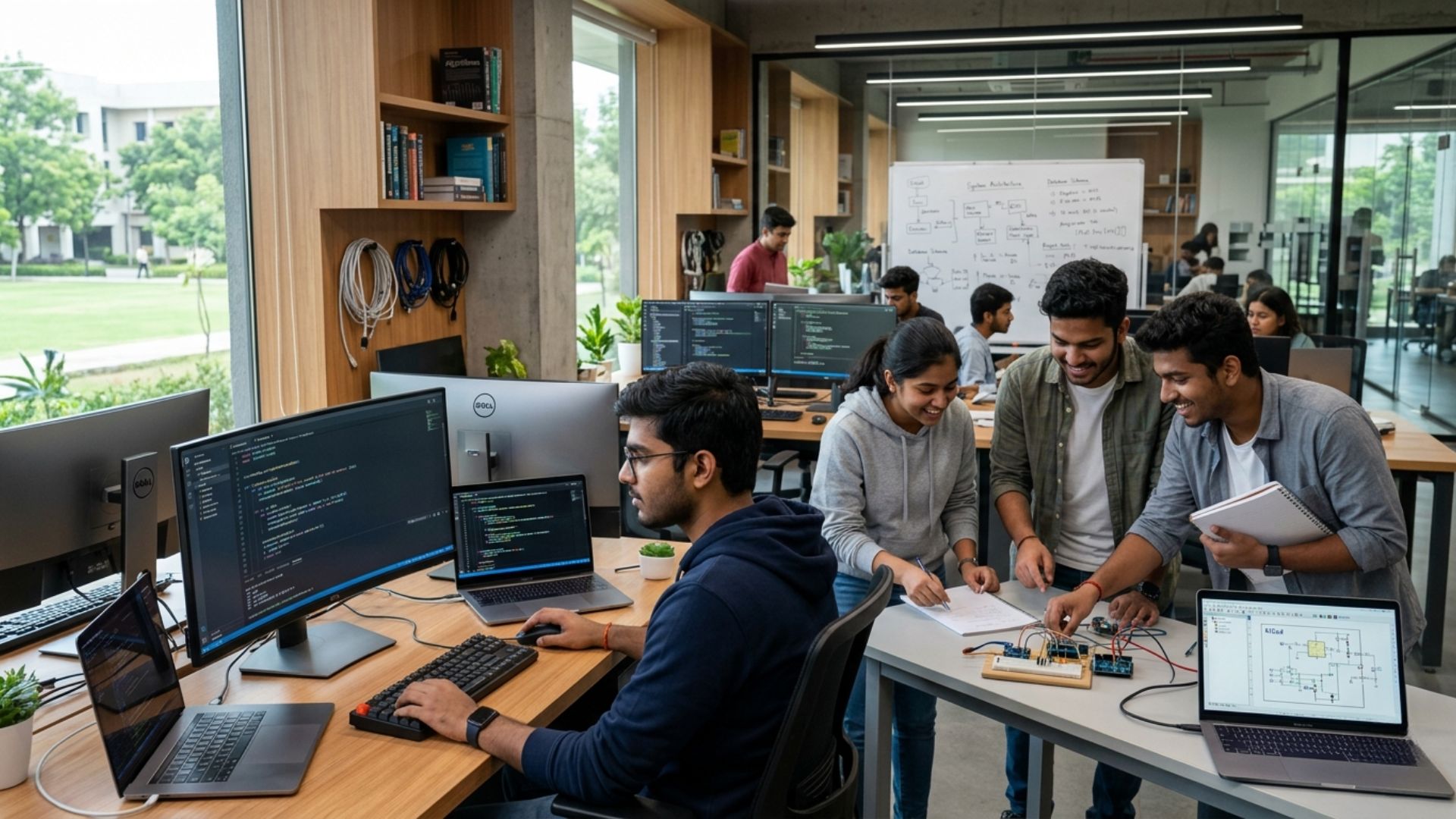
A degree becomes far more valuable when students leave with building real-world products. That includes:
Collaborative project work with clearly divided responsibilities
Larger end-of-course builds that bring multiple skills together
Assignments that feel closer to real product or application development
Practical work experience through internships or industry exposure
Opportunities to take software beyond development into testing or release
Projects that students will be able to talk about during interviews or present in portfolios.
Projects matter because they expose students to the less predictable side of technical work, including unclear requirements, bugs, revisions, and the challenges of working with others.
This is why learning by building models is becoming more relevant. Scaler School of Technology CS & AI Programme offers a real-world curriculum with AI integrated from the start and a learn-by-building approach that gives students early exposure to practical software work from the very beginning.
Exposure to Modern Tech Practice
A BTech should also reflect how technical work happens now. Depending on the field, that may include exposure to:
Exposure to how modern applications connect services and exchange data
Familiarity with cloud-based development environments and deployment ideas
Understanding of collaborative coding tools and workflow management
The knowledge of the process of software testing, reviewing, and improvement prior to release.
Basic understanding of safe development practices and system reliability
Some experience with AI-supported workflows in technical work
Practical use of tools that are relevant to the student’s chosen area or specialisation
Students do not need to master everything in college, but they should graduate with a realistic understanding of the environments they are likely to work in.
A Strong Learning Environment
The degree becomes more useful when the college has a technical culture around it. Good signs include:
Student communities that encourage technical exploration beyond class
Events or challenges that push students to build and solve under pressure
Opportunities to present, discuss, or improve practical work
A peer group that favours skill-training and productive technical rivalry.
Faculty who are available for guidance outside regular lectures
Clear signs of internship pathways, external exposure, or industry interaction
This is one of the clearest differences between a degree that remains mostly classroom-bound and one that genuinely helps students grow.
When BTech Starts to Feel Less Valuable
A BTech will eventually become less useful when they have 4 years of experience in an environment that provides minimal practical experience and poor skills training.
That can happen when:
Teaching remains mostly theoretical
Project work is shallow and repetitive
Labs are outdated or rarely used well
The curriculum feels disconnected from current practice
Students depend too heavily on the degree label alone
Fees are high, but the overall return feels limited
The college has very little technical culture beyond exams
In such situations, students may still graduate with a degree, but without enough confidence, practical exposure, or clarity about what they can actually do.
Can Students Build Tech Skills Without a BTech?
Yes, in many cases they can.
Online learning, self-study, certifications, open-source work, and bootcamps have made skill-building more accessible than before. Some students do build strong careers without depending heavily on a traditional degree route.
At the same time, BTech can still offer advantages that are harder to recreate independently, such as:
Structure over four years
Time to grow technically
A campus learning environment
Peer learning and competition
Internship opportunities
Formal academic eligibility
Exposure to multiple technical directions before specialising
So the real question is whether the degree adds enough value beyond what a student could realistically build on their own.
How Students Should Judge Whether Their BTech Will Be Worth It
The decision can be clarified with the help of a few practical questions:
Does the branch match the type of skills that I am really interested in?
Does the college support real projects, not just submissions?
Is there a serious technical culture on campus?
Are internships, labs, and industry exposure available?
Is the fee justified by the likely value that the college provides?
Will the curriculum assist me in developing practical technical profundity?
Conclusion
BTech can still be worth it in India for students who want to build real tech skills, but its value is no longer automatic. It becomes useful when the degree offers strong fundamentals, meaningful project work, practical exposure, and a learning environment that helps students grow beyond exams and classroom notes.
At the same time, the degree alone is not enough. What matters more is how students use those four years to build skills, gain experience, and prepare for real technical work.
FAQs
1. Is BTech worth it in India for software and tech careers?
Yes, it can be, especially when students use the degree to build fundamentals, projects, internships, and practical technical skills. The degree alone is not enough, but it can still be a strong foundational platform for software and tech careers.
2. Is BTech worth it in India if students can learn online?
Online learning can assist the students to develop numerous valuable skills, yet BTech can provide the structure, peer education, internship, campus, and formal academic eligibility. The value depends on whether the degree adds enough beyond what a student could learn independently.
3. What makes a BTech worth it for students in India?
A BTech becomes worth it when it helps students develop strong skills, practical experience, and confidence. Its value depends on the branch, the college, and how actively the student uses those 4 years.