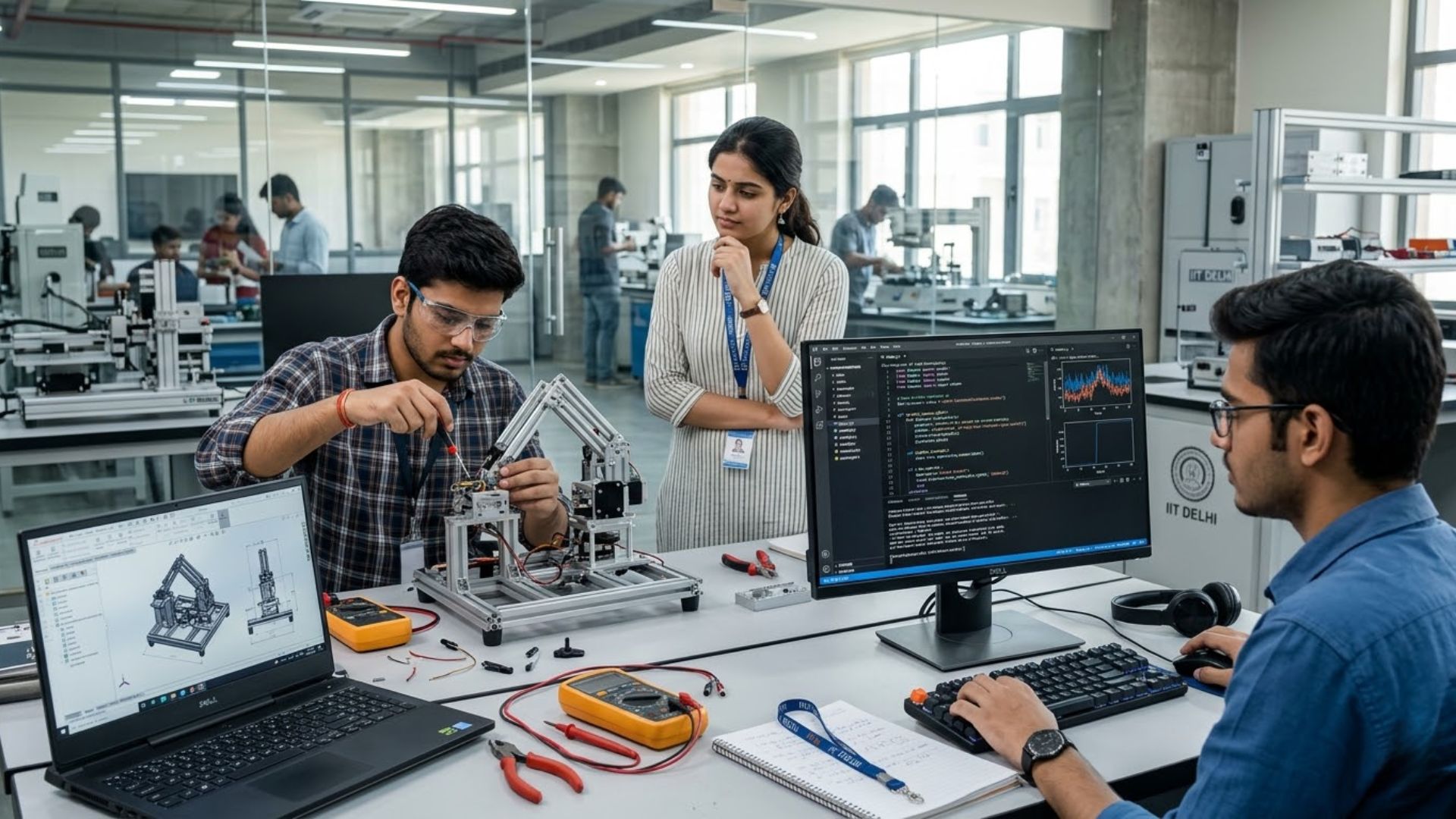
Students after 12th find it hard to choose between Computer Science and Mechanical Engineering. Computer Science may be considered a popular choice because of software, AI, data, and tech careers. Mechanical Engineering, on the other hand, is an established core engineering branch connected to machines, manufacturing, EVs, robotics, and automation.
The key to making the right choice between computer science vs mechanical engineering is not which is better. It comes down to what interests a student, the problem they want to solve and what they want to do as a career.
Core Difference Between Computer Science and Mechanical Engineering
Computer Science Engineering: Focuses on software, programming, algorithms, databases, operating systems, AI, cybersecurity, cloud, and digital systems. It is more connected to building apps, platforms, websites, data systems, and software products.
Mechanical Engineering: Focuses on machines, design, manufacturing, thermodynamics, mechanics, robotics, EVs, automation, and physical systems. It is more connected to how machines are designed, built, tested, and improved.
What Students Learn in Each Branch
In Computer Science, students usually study programming, data structures, algorithms, databases, computer networks, operating systems, AI, machine learning, cloud basics, and cybersecurity. Students who are comparing CSE with AI-focused options can also read about the difference between CS and AI before deciding how specialised they want their learning path to be.
In Mechanical Engineering, students usually study engineering mechanics, thermodynamics, fluid mechanics, machine design, manufacturing processes, CAD/CAM, robotics, automation, and energy systems.
This comparison helps students understand the academic focus of each branch before looking at placements or future scope.
Career Paths and Future Scope
Both Computer Science and Mechanical Engineering can lead to strong careers, but the nature of work is different.
Career Paths for Computer Science Engineering: Computer Science can lead to roles in software development, backend engineering, frontend engineering, data science, AI/ML, cybersecurity, cloud computing, product engineering, and app or web development. Software development also remains a large global workforce category.
Evans Data’s Worldwide Developer Population Report 2025 tracks global developer population numbers and forecasts them through 2030, showing that developer-related work continues to be closely measured across countries and regions.
Career Paths for Mechanical Engineering: Mechanical Engineering leads to roles in mechanical design, manufacturing, automobile and EV engineering, robotics, product design, HVAC, quality engineering, maintenance, industrial engineering, and automation. It continues to be important when students focus on skills in design tools, robotics, EV technology, manufacturing systems, automation, and energy systems.
The U.S. Bureau of Labor Statistics projects mechanical engineer employment to grow 9% from 2024 to 2034, with about 18,100 openings each year on average.
For students who see robotics and automation as a possible direction within Mechanical Engineering, this guide on robotics engineering colleges india can help them understand the specialised college and course options in this field.
The future scope of both branches depends on how students build skills during the course.
What to Check Before Choosing Between CSE and Mechanical
Students should not compare Computer Science and Mechanical Engineering only by salary packages or branch popularity. Interest should come first, but students should also check how strong that branch is in the college they are considering.
Before choosing, students should check:
Branch-wise placement outcomes
Median package for CSE and Mechanical separately
Companies and roles offered for each branch
Internship and project opportunities
Lab quality and practical exposure
Alumni outcomes from the same branch
A student interested in software and digital careers may benefit more from a strong CSE programme. A student interested in machines, design, robotics, EVs, or manufacturing may benefit more from a strong Mechanical department with good labs, faculty, and industry exposure.
How to Decide Which Branch Fits You Better
The right choice in computer science vs mechanical engineering should start with interest, not only placements or trends.
Computer Science may suit students who enjoy coding, logic, software, AI, data, cybersecurity, cloud, and digital product-building.
Mechanical Engineering may suit students who enjoy machines, physics, design, manufacturing, robotics, EVs, automation, and physical systems.
Before deciding, students should avoid:
Choosing CSE only because it is popular or high-paying
Choosing Mechanical only because it is a traditional core branch
Ignoring the actual subjects in both branches
Comparing only the highest package
Assuming Mechanical is outdated
Assuming CSE guarantees a high-paying job
For students leaning strongly toward software, AI, and digital product-building, Scaler School of Technology’s CS & AI programme is designed around computer science fundamentals, AI exposure, project-led learning, and industry-oriented preparation.
Conclusion
The computer science vs mechanical engineering decision depends on what kind of problems a student wants to solve in their future. Computer Science points more towards software and digital systems, while Mechanical Engineering points more towards machines, design, manufacturing, and physical systems.
FAQs
1. Which is better, computer science vs mechanical engineering?
Neither branch is better for every student. Computer Science may suit students interested in coding, software, AI, and digital products, while Mechanical may suit students interested in machines, design, manufacturing, EVs, robotics, and automation.
2. Is Mechanical Engineering still a good branch?
Yes, Mechanical Engineering can still be a good branch for students interested in robotics, EVs, automation, manufacturing, product design, energy systems, and core engineering work.
3. Can Mechanical Engineering students move into software jobs?
Some Mechanical students move into software, analytics, product, automation, or robotics-related roles. However, they acquire coding, data, or software skills.