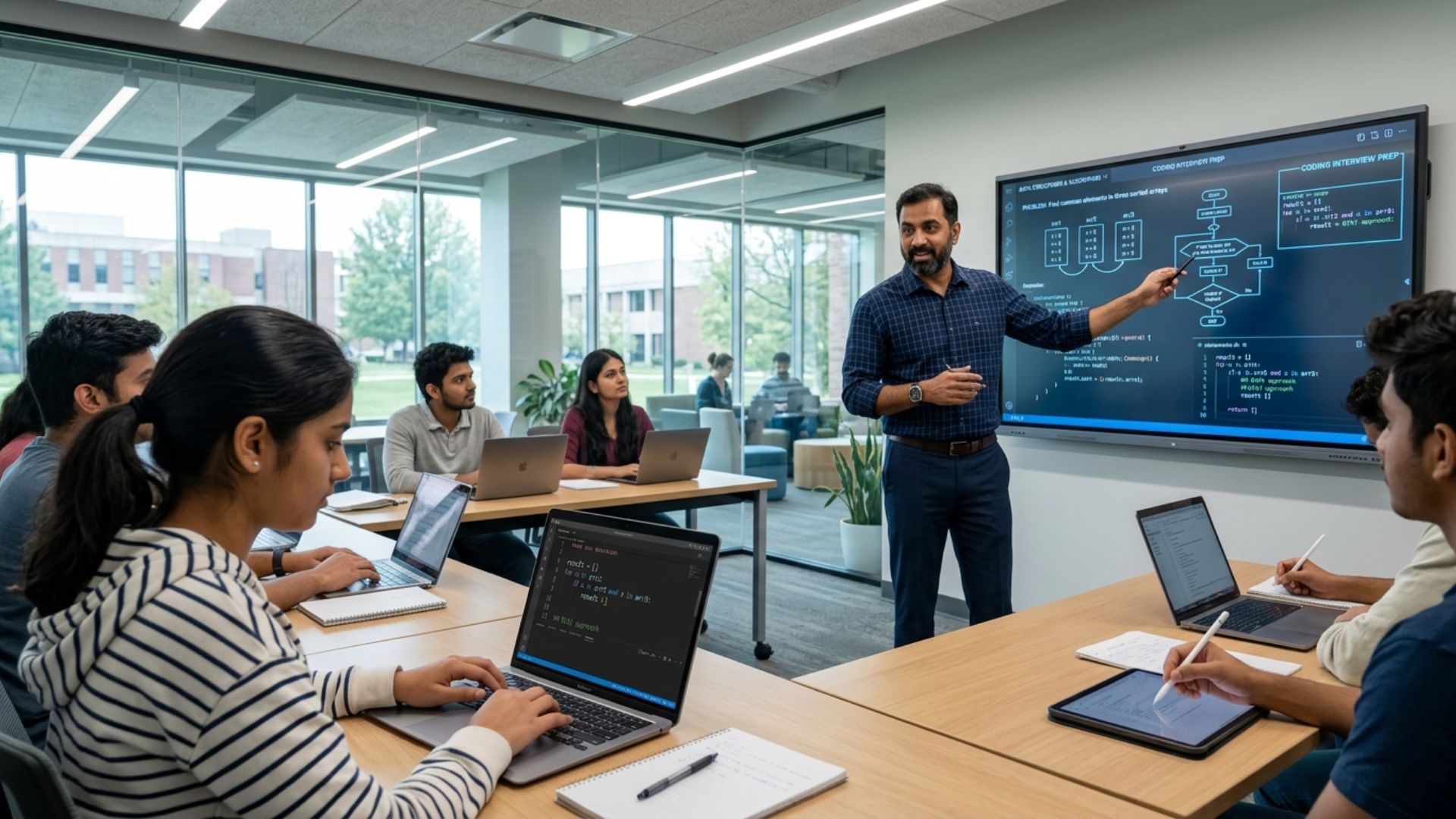
A lot of colleges talk about being “industry-ready”, but that means very little if students are not actually learning how to build, solve problems, and work with real-world technology. That is why more students are now looking beyond brochure claims, campus size, and placement banners. They want to know which colleges actually prepare them for tech jobs and which ones stop at just theory, lab work, and exam-focused learning.
What Actually Prepares Students for Tech Jobs
A good college for tech jobs does more than teach concepts. The colleges that prepare for tech jobs usually help students build strong fundamentals, work on real projects, learn with current tools, gain industry exposure, and keep coding beyond the classroom.
The easiest way to judge that is to break it into a few clear signals.
Signal 1: Strong Fundamentals Matter Most
A good college should help students get genuinely comfortable with the basics first. That means building a solid understanding of core computer science instead of rushing too quickly into flashy new terms and specialisations.
The fundamentals usually include:
Programming
Data structures
Algorithms
Databases
Operating systems
Software engineering
Problem-solving
These may sound basic, but they still form the foundation for most tech roles, whether a student later moves into software development, backend, cloud, AI, data, or security.
This is where many students get confused. A college may talk a lot about AI, data science, or cybersecurity, but if the core foundation is weak, it often becomes harder to learn those areas properly.
A simple way to judge this is to look at the first two years of the course curriculum. If the early semesters feel too light on core computing and too heavy on buzzwords, that is usually a sign to look more carefully.
Signal 2: Real-world Coding Means Building, Not Just Submitting
One of the clearest signs of colleges that teach real world coding is that they move beyond lab submissions and exam questions. There is a big difference between learning coding for marks and learning coding for real work.
Real-world coding is different. It involves building things that work outside the classroom, debugging problems that do not have obvious answers, reading and improving existing code, collaborating with others, and turning ideas into working products over time.
A stronger college creates room for that kind of learning through things like:
Project-based coursework
Coding clubs and hackathons
Open-source exposure
Product builds
Assignments that feel closer to actual engineering work
This kind of learning is easier to build in programmes that are designed around applied, real-world application from the very beginning. At Scaler School of Technology, CS & AI programme students learn by building products and systems from day 1.
Signal 3: Good Colleges Connect Students to Real Work Early
A college preparing the students for careers in technology fields should give them exposure to real work well before final placements. That can come through internships, live projects, mentorship, and practical learning experiences that help students understand how teams work, how projects move, and how problems are solved outside the classroom.
This is also where programme design starts to matter. Some colleges create room for this kind of exposure much earlier, instead of treating it as something that only happens at the end of the degree. At Scaler School of Technology, the learning journey is built around hands-on projects, internships, and extended industry immersion, which makes the transition from classroom learning to real tech work feel more natural.
When judging a college on this front, it helps to look at a few simple things:
Whether internships are structured or self-driven
Whether students work on live projects or only practice assignments
Whether there is regular interaction with people from the industry
Whether students get meaningful exposure before graduation
That usually gives a much clearer picture than a placement headline on its own.
Signal 4: The Right Environment Helps Students Go Further
Students rarely become job-ready because of the curriculum alone. A lot depends on the environment around them. In a strong college culture, students do more than what is required for marks. They join coding communities, take part in hackathons, build side projects, learn from seniors, and stay curious outside the classroom. That kind of atmosphere matters because it helps students connect what they learn with the kind of work they may do later in tech roles.
Red flags to watch out for
There are some institutions that seem impressive at first glance but become suspicious when you look a little closer.
It is worth being cautious if:
The course feels too theory-heavy with very little building
There is no presence of a coding culture beyond the classroom
Specialisations are promoted heavily, but the core foundation looks weak
Internship support or industry exposure feels unclear
How to verify a college before you apply
Do not just go by ranks or the name of the college. It is better to think through the bigger question of branch vs college for placements and career growth before making a final decision. Start with the curriculum. Go semester by semester and see what students really study, when project work begins, and whether the programme builds a strong computing base.
Then look beyond the curriculum and check things like:
Student projects
Hackathon participation
GitHub or portfolio work
Coding clubs and tech communities
Internship opportunities
Alumni outcomes
The kinds of roles students move into after college
If possible, speak to current students or recent graduates. That usually tells you much more than a ranking list ever can.
Conclusion
A good college does not have to be the one which boasts the most. It is rather the one that ensures that students learn skills and engage in projects that help them gain confidence while working with technology.