
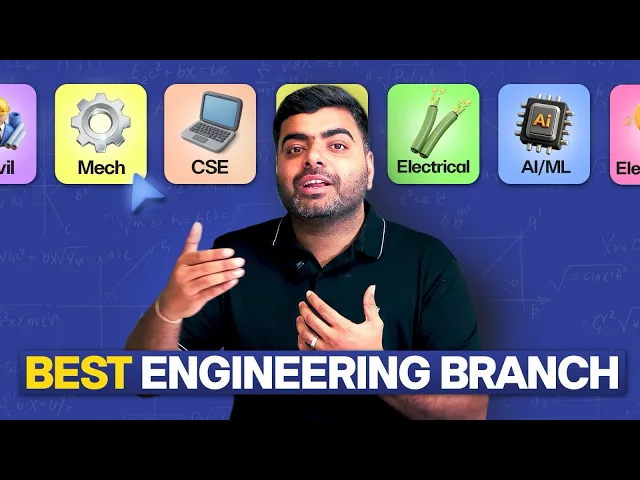
The scope of a branch in the long term is determined by the various opportunities that are generated, the relevance of that branch in the future, student fit and various work options that are available to them.
Computer Science and Engineering offers the broadest career scope, and therefore, the top spot for long-term scope first goes to Computer Science and Engineering. With lots of connections to industries like software development, AI, cloud computing, cybersecurity, product engineering and data science/business intelligence (BI)/analytics, there are lots of career opportunities for students in this branch.
Many other engineering disciplines have a huge scope.
AI/ML and Data Science: For the coding student who likes to work with models and work with data to draw conclusions.
Electronics and Communication Engineering: This branch is suitable for students who are interested in electronics, designing/developing devices and/or communication systems, including the embedded technology in them.
Mechanical and Electrical Engineering: There is scope in these fields for students interested in manufacturing, automation, mobility, energy and industrial systems.
Civil Engineering: For students interested in infrastructure, construction and public systems.
Best Engineering Branches for Future
Don’t rely on current trends or the salaries of individual branches to find the best engineering branches for the future. Compare engineering branches based on career opportunities, current industry demand, future development and your own personal interest.
Engineering branch | Future scope | Best suited for students who like |
Computer Science and Engineering | Software, AI, cloud, cybersecurity, product engineering and data roles | Coding, logic, software and digital problem-solving |
AI/ML and Data Science | Automation, analytics, machine learning and data-driven products | Maths, models, patterns, data and prediction |
Electronics and Communication Engineering | Semiconductors, embedded systems, telecom, IoT and hardware-software roles | Circuits, devices, communication systems and applied electronics |
Mechanical Engineering | Manufacturing, automation, mobility, robotics and industrial systems | Machines, design, physical systems and production |
Electrical Engineering | Energy systems, automation, power, control systems and infrastructure | Power systems, circuits, energy and industrial technology |
Civil Engineering | Infrastructure, construction, urban systems and public projects | Structures, planning, construction and large-scale execution |
This table is not definitive and is intended to serve as a guide to help determine the best engineering branch in future based on your skills and desired career path.
Which Branch Has Most Scope? How to Think About Scope in Engineering
Many students use the word scope while choosing an engineering branch, but it can mean different things. It may refer to:
More employment opportunities
Higher salary prospects
Greater long-term relevance
Mobility between jobs and industries
Compatibility with future technologies
How to Judge Which Branch Has Long-Term Value
Choosing a field of study because it seems trendy right now is not the best course of action for a student. When comparing engineering branches, there are several useful filters to consider when choosing the right path for the student.
Industry demand: Market demand for the branch compared to the rest of the market, i.e. growing industries and areas of employment.
Career flexibility: Can the student apply their skills in different roles?
Relevance to future: How does this compare to the prospects of AI, automation, energy, software, devices or even infrastructure?
Student fit: Does it match the student’s interest in coding, electronics, machines, design, maths or systems thinking?
While a field may have strong market value, it may not be worth investing in if it doesn’t match the student’s interest.
Common Mistakes Students Make While Choosing a Branch
Students often get confused between the below factors:
The highest-paying package
The most renowned branch
The branch that others are opting for
The branch that seems to be trendy
All of these are different things. One should take a more holistic approach when making a decision.
You can also check out this video; which talks about a common mistake students make when picking an engineering branch.
The Engineering Branch Mistake Everyone Makes
Popular Engineering Branches With Strong Long-Term Relevance
1. Computer Science and Engineering
Computer Science and Engineering (CSE) is one of the most popular programmes. The huge opportunity for CSE students is in software development, AI, cloud, cybersecurity, product engineering and Data Science/analytics roles in digital work is not confined to technology companies only.
Software and data roles are no longer restricted to companies in the technology space. There are numerous opportunities for growth in finance, healthcare, manufacturing, logistics, telecom, education and consumer businesses, amongst others. This diversity makes CSE a favourite amongst students as it provides them with a flexible option to grow over time. Students who are thinking about the future of computer science engineering should also look at how the branch connects with software, AI, cloud, cybersecurity and product-based roles.
Take a look at the course curriculum for Scaler School of Technology’s CS & AI Programme, and you’ll get an idea of how it integrates AI into the traditional Computer Science curriculum from the very beginning.
Here’s how students can benefit from the programme’s early placement results. In its first placement cycle, Scaler School of Technology saw 36% of its first batch students receive internship to pre-placement offers even before their fourth year started. The average post-conversion CTC for these offers is over ₹20 LPA, with the highest offer being ₹44 LPA.
2. AI/ML and Data Science
AI/ML and Data Science are rapidly developing fields that are of great interest to many students today. Usually, these subject areas are of interest to students who enjoy coding, working through logical argument, maths, and generally like to deal with data and models to solve problems.
Students comparing CSE vs AI Engineering should remember that these domains require strong fundamentals and should not be treated as shortcut alternatives to CSE. If you are interested in AI/ML and Data Science, then it is best to have an interest beyond the current trend.
3. Electronics and Communication Engineering
Another stream that is extremely relevant for students with a great interest in Electronics and Communication Systems and an affinity for topics like Embedded Systems and Semiconductors is Electronics and Communication Engineering. Students with an inclination towards systems and who are interested in doing something related to hardware and electronics-based devices will find Electronics and Communication Engineering a very suitable option.
The Electronics and Communication Engineering branch is relevant as there are numerous industries that require ECE graduates, such as Telecommunications, Electronics Manufacturing, Integrated Circuit/Chip Design, Embedded Systems and Technology. So, ECE is still relevant for students who are interested in studying systems, devices and applied electronics.
4. Mechanical, Electrical, Civil Engineering and Core Branches
These core branches are named after sectors that economies keep building over time. For the Mechanical engineering discipline, the sector of manufacturing is particularly relevant. This means industrial systems and their maintenance, such as plant and machinery, as well as vehicles of all kinds, automotive systems and automated production systems.
The civil discipline also applies to problems in infrastructure, urban systems and building construction. While these are not currently trend-based, they are part of physical systems, engineering design and large-scale industry that can be addressed by students.
Which Engineering Branch May Fit You Better?
No branch is best for every student. The best work for any given student is the work he or she naturally enjoys.
Students who have done coding, software or digital problem-solving before are usually a good fit for CSE.
Students who are logical and enjoy working with models, lots of maths and tons of data may find AI/ML or Data Science very appealing.
Students who are interested in working with machines, manufacturing, industrial systems or even design-related work could be very successful in Mechanical Engineering.
Students interested in power systems, automation, electrical infrastructure and even energy-related topics in some form or another, and thus also find Electrical Engineering meaningful and relevant.
Civil Engineering offers opportunities in many areas related to infrastructure and the construction of urban projects.
In the end, the best branch for a student will be the one with the best combination of market demand, the student’s interest in the department and long-term applicability to real-world problems.
Conclusion
Choosing the best engineering branch in future is not necessarily a matter of how popular or how in demand a field is currently.
While AI/ML, Data Science and ECE have gained popularity due to short-term demand, several core engineering branches continue to remain relevant in the long run. Therefore, the branch of engineering which is best for future is the one that matches a student’s interests, strengths, learning style, college and skill-building roadmap.
FAQs
Which branch has the most scope in engineering for the future?
Computer Science and Engineering has the broadest scope in software, AI, cloud, cybersecurity, product engineering and data-related fields. While there are many disciplines of engineering that have relevance, in the end, there is no use in studying a discipline that does not have relevance to a student’s career objectives. When studying to get a job, one should choose a discipline that interests them, so they can have a good career.
What is the best engineering branch in the future?
There is no single best engineering branch for every student. CSE, AI/ML, Data Science, ECE, Mechanical, Electrical and Civil all have very strong scope, but that also strongly depends on the set of skills a student has acquired and the career goals a student has in terms of his/her career.
Which branch of engineering is best for future tech careers?
For future tech-related work, CSE, AI/ML, Data Science and ECE are the areas that have scope in the future, as these are related to software, automation, AI, devices, data, digital systems, etc.
Can traditional engineering branches still have scope?
Yes. Traditional branches such as Mechanical, Electrical and Civil Engineering can still have scope and long-lasting careers in infrastructure development, manufacturing, designing systems to function in energy, industrial work, etc.
How should students choose between different engineering branches?
If a student is wondering which engineering branch should I choose, they should consider a few parameters before choosing the right branch, i.e. area of interest, subjects studied in college, career growth, industry demand, college quality and flexibility to switch over to another domain after 2-3 years. Picking up a branch only because it is popular might not be right for you in the long run.