When JEE Main does not go the way you expected, the result is only one part of the problem. What usually feels harder is everything that comes after. Suddenly, you are thinking about counselling, another attempt, other entrance exams, and different college options all at once. That is when even simple decisions start to feel overwhelming.
A lot of students get stuck at this stage. Not because they do not have options, but because every option starts to feel urgent. Instead of rushing into a decision, it helps to take a step back, look at your situation clearly, and figure out what matters most right now.
This guide is designed to help you choose a direction for the next 30 days, build a realistic roadmap for the next 12 months, and focus on what actually drives strong engineering outcomes over the next four years, regardless of one exam result.
Immediate Reset and Decision Clarity
Before you pick a route, it is better to first understand what “not as expected” means for you. Most students fall into one of these situations:
You missed the rank/college/branch you were aiming for.
You cleared the cutoff, but the options you want don’t seem reachable right now.
You’re stuck between two thoughts: “Should I try again?” vs “Should I start college now?”
For the first 48–72 hours, don’t panic and don’t try to decide your entire future. Keep the goal smaller and more practical:
List your real options (counselling routes, exams left, colleges you’d consider).
Pick one main track you can follow calmly for the next 2–3 weeks—without exhausting yourself.
Once you do that, the noise reduces. And the next steps start feeling manageable.
JEE Failure What to Do After Results
Track A: Start College This Year and Build Momentum Early
This track fits if you want to move forward now. The focus becomes: attend a college that you feel comfortable with and begin developing skills during the first semester, like projects, coding practice (if you’re in tech), and internship awareness. It’s not “settling.” It is the decision to move forward instead of waiting around.
Track B: Reattempt With a Structured Plan
This track is understandable when you know well what went wrong and what you would do differently. For instance, too many silly mistakes, weak chapter errors that kept repeating, or time management in papers. A second effort succeeds well when it is a concentrated endeavor, not a full restart with no structure.
Track C: Keep Parallel Routes Open While You Decide
This track is useful when you’re not ready to lock in on one decision yet. You keep admissions steps moving (forms, documents, shortlisting) while also staying prepared for a limited set of other exam routes. The rule in this case is easy; keep it small and organised. If you try to manage too many exams and too many forms together, it quickly becomes overwhelming.
The goal isn’t to find the “perfect” track. It’s to choose the one you can execute calmly and consistently.
Beyond JEE Mains: What Shapes Your Engineering Journey
A JEE rank can affect your entry point, but it doesn’t decide how good an engineer you become. By your second, third year, what starts mattering more is: Can you really build things? Learn consistently? Really show proof of what you can do? That’s what internships and many placements end up looking like.
Here are 4 things that usually matter more than your JEE rank later:
1) Consistent skill-building
You don’t need 10 hours everyday. You need regular effort. When it is honestly done every month, it produces greater progress than all-nighters, which happen once in a while.
2) Projects that show proof
Projects aren’t “extra activities.” They’re your proof that you can apply what you learn. A small, finished project is better than a big idea that never gets completed.
3) Internship readiness (start early, start small)
You don’t need an internship in your first year. But you do need to begin to build the base skills, a portfolio, and awareness of what the companies are looking for, so you're ready when opportunities show up.
4) Peer environment and mentorship
Through having people around you who build, learn, and share resources, your pace improves. Good peers make consistency feel normal instead of lonely.
Branch choice matters too, but not as dramatically as students think. If you pick a branch you can stick with, and you keep upgrading your skills steadily, you’ll have more options by the second year than you can see right now.
30-Day Roadmap After JEE Mains
This plan is meant to stop the “what now?” spiral and keep you moving. You don’t need to plan your whole future in one day, you just need to use the next 30 days well.
Week 1: Choose your route and set up a shortlist
Goal: Clarity + options on paper.
Write down your non-negotiables: branch preference, budget range, and location limits.
Create a longlist of colleges/routes. Keep it wide, don’t try to perfect it yet.
Pick one main track (start college/reattempt / parallel plan) and one secondary route only if needed.
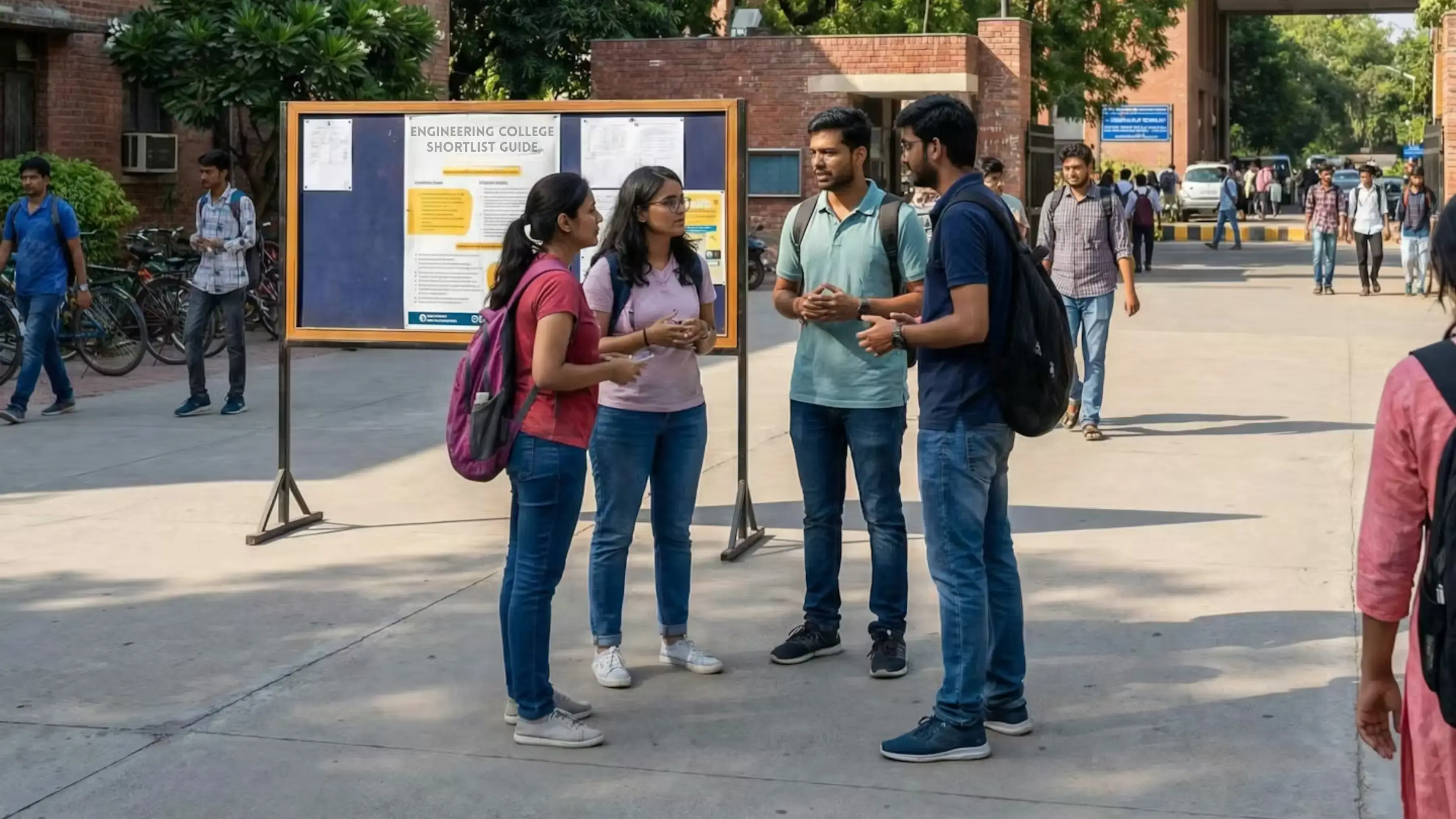
If you want a clean way to shortlist without getting overwhelmed, you can check out this blog: Engineering College Shortlist Guide: Top Options, Branch Picks, and How to Choose
Week 2: Choose one skill track and build daily momentum
Goal: Start moving instead of waiting for the “perfect plan.”
Choose 1 track you can follow for the next 6–8 weeks (based on your likely branch interest). Don’t try to do 3 things at once.
If you’re leaning CSE/IT/AI:
Start with coding basics + problem-solving (DSA fundamentals) or build one small project (web/app) you can finish.If you’re leaning ECE/EE:
Focus on strong Math + basic circuit concepts, and do small practice problems regularly. If possible, add a simple hands-on mini task (basic electronics/circuits learning) to make it real.If you’re leaning Mechanical/Civil/Chemical:
Develop basics (Physics + basic engineering concepts) and develop a practice of getting solutions to application questions. You can also start learning one basic skill slowly (like engineering drawing basics or introductory design thinking), without overloading yourself.If you’re unsure about branch:
Spend 1 week each trying 2 tracks lightly (example: basic coding + basic applied physics problem-solving), and in the next month, you will select one of them.
Week 3: Build proof (small, complete, and real)
Goal: Visible output + confidence.
Build something small that you can finish:
One basic project with a clear output (even if it’s simple)
A short write-up: what you built, what broke, what you fixed, what you learned
This helps in two ways: it builds confidence and starts creating proof you can show later.
Week 4: Commit and execute
Goal: Stop changing direction.
By week 4, aim to lock:
The admission route you’re actively executing, and
The learning routine you’ll continue for the next 8–12 weeks
Progress matters more than “perfect planning.”
12-Month Roadmap Based on Your Track
If you join college this year
Think in habits, not big promises. Three habits make a noticeable difference by the end of the first year:
Weekly output: One small learning goal + one visible output (notes, code, mini project)
Peer environment: Join a club, a study group, or a builder community, don’t study alone for a year
Internship readiness: Learn what seniors used to get shortlisted and build toward those basics early
If you reattempt
A reattempt works better when it’s structured and repeatable:
Fix accuracy first (silly mistakes and rushed guesses cost a lot)
Follow a mock + analysis loop (don’t collect scores without review)
Improve a defined set of high-impact chapters instead of restarting everything
A reattempt usually works when it looks like a plan you can repeat, not a plan that depends on motivation.
Skill-First Learning Environment (A Tech-Focused Model to Evaluate)
If you’re looking for a path where you start building early (instead of waiting until later semesters), you can also check Scaler School of Technology alongside the usual college routes. It’s a fully 4-Yr residential undergraduate programme with a campus setup designed around peer learning and “building culture” (clubs like open source, competitive programming, entrepreneurship) and includes facilities like the Scaler Innovation Lab on campus.
What this route is:
Programme choices: You can apply for CS & AI or AI & Business, or both (you select this during the application).
Eligibility (as listed): Age ≤ 20 (as of 1 July 2026) + at least 60% in Class XII Mathematics; open to current Grade 12 students and pass-outs (2024 onwards).
Selection is application-based: You submit details + a short video essay as part of the application.
How admissions work
Admissions are built as a step-by-step process:
Application + video essay (and the application fee).
Qualify for interviews through either:
NSET (120-minute online test: Mathematics + Logical Reasoning; used for admission + scholarship eligibility; you can take it up to 3 times in an academic year), or
Fast-track via JEE/SAT for eligible candidates (criteria can vary by intake).
Two interview rounds (an AI-led round and an industry-led working professional round).
Acceptance or Rejection is communicated after interviews within 7–10 days.
If you want a structured, project-led tech environment from early on, this is one more route you can evaluate before locking your plan.
Common Mistakes After JEE Mains Results
Doing nothing for weeks because you’re hoping clarity will “just come.”
Switch plans every two days, drop, college, new exams, and back to it, until you lose time.
Choosing colleges only by ads or one ranking list, without checking basics like branch fit, cost, and real student outcomes.
Postponing skill-building to “second year,” and then struggling to catch up when internships start.
Signing up for too many exams and ending up preparing properly for none of them.
Conclusion
A JEE Mains result that isn’t what you expected doesn’t decide your future. What is more important is what direction you are moving to after that, and whether you can go on in that direction.
Pick one main track you can realistically execute, keep the next 30 days organised, and start building momentum early (skills, projects, routine, whatever fits your path). You should have a strategy that you can follow without experiencing burnout.
FAQs
1. JEE failure: What to do after results: what should you focus on first?
Begin by choosing a primary direction for the next 2–3 weeks:
Join college this year, or
Reattempt with a clear plan, or
Keep 1–2 parallel routes open while you decide
Then follow a plan instead of staying stuck in overthinking.
2. Future after JEE failure: Can I still do well in engineering?
Yes. This is due to the fact that many students excel since they use college in the right way, with steady skill-building, projects, and early internship readiness. By second/third year, what matters most is usually what you can show work you’ve built, skills you’ve practiced, and how consistent you’ve been, not just your entrance rank.
3. How do I choose a branch if I’m confused?
Don’t choose only by “scope” or what others say. Look up 2–3 real first-year topics and typical student projects from each branch. Then ask yourself: Can I see myself doing this every week for a few years? If the answer is a hard no, it’s worth rethinking even if the branch sounds popular.